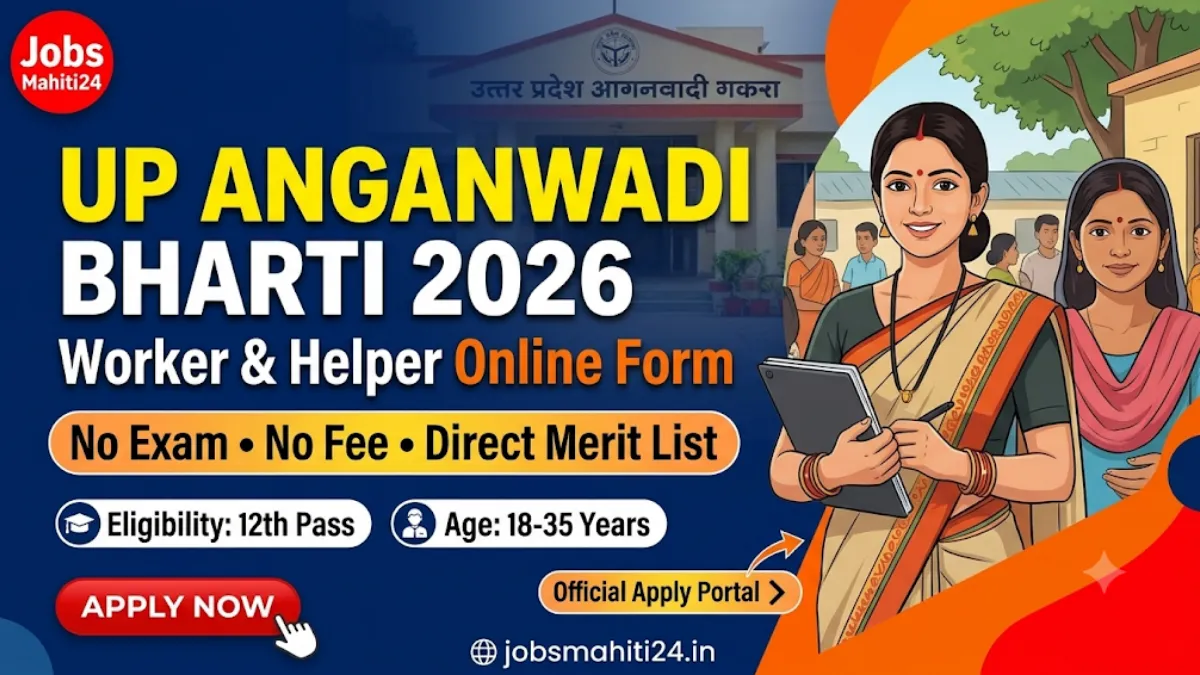

UP Anganwadi Bharti 2026: Eligible female candidates across Uttar Pradesh can apply online for Anganwadi Worker, Mini Anganwadi Worker, and Anganwadi Helper vacancies announced district by district under the Department of Women and Child Development. Recruitment for these community-focused roles is managed locally, making it essential to check the specific notification, ward or gram sabha residency requirement, and application deadline for your exact area before submitting a form. Candidates generally need to be between 18 and 35 years old and meet the required educational qualification, typically passing Class 12, depending on the notified post. Application forms are completely free of cost across all categories, and selection is based on merit from academic marks followed by document verification rather than a written test or interview. Interested applicants should review official instructions carefully, prepare valid identity, residence, and qualification documents in advance, and submit their online application well before the closing date listed for their district on jobsmahiti24.in.
Recruitment Overview and Department Role
When I look at recruitment updates for young people and families in my circle, local government jobs often feel confusing until you break down who runs them. UP Anganwadi Bharti 2026 is handled through the Department of Women and Child Development along with district program offices across Uttar Pradesh. Instead of a single central exam for the whole state at once, openings are released district by district when vacancies open up locally. For anyone trying to understand how the process works, the main goal of these roles is supporting early childhood care, nutrition guidance, and basic welfare outreach right inside neighborhoods and villages. Knowing that districts move at their own pace helps you avoid guessing and keeps your focus on the exact notice meant for your local area.
Available Posts and Local Duties
The recruitment drive centers on Anganwadi Worker, Mini Anganwadi Worker, and Anganwadi Helper positions, each carrying practical day-to-day responsibilities. Workers usually coordinate center activities, help families with nutrition tracking, and keep local records organized, while Helpers assist with daily operations, cleanliness, and supporting children and mothers who visit the center. Mini Anganwadi Worker roles exist in smaller or specific coverage pockets where lighter center setups are used. Before filling out anything, reading the post-specific rules matters because duties, honorarium details, and eligibility notes can differ slightly depending on whether you are eyeing a Worker or Helper opening in your district.
Residency Rules for Gram Sabha and Wards
One rule that catches many applicants off guard is strict local residency. To apply for a particular opening, a female candidate generally needs to be a permanent resident of that exact gram sabha, rural ward, or urban ward where the vacancy is listed. If a woman is married, the residency proof connected to her current household or notified rules is what counts during checking. As someone who has seen friends lose out on paperwork details, I always tell people to double-check their residence certificate spelling, ward or village name, and address match before starting an online form.
Age Limit and Category Relaxation Rules
Age eligibility is another straightforward checkpoint that you should verify right away. Typically, candidates need to be at least 18 years old and not older than 35 years, though age relaxations apply to reserved categories according to government rules. Your exact age calculation usually depends on the cutoff date mentioned in the specific district notification. Checking your date of birth against both the minimum and maximum limits early saves time, especially if you are helping a cousin, sister, or neighbor figure out whether she is eligible for a current district opening.
Educational Qualification Requirements
For most postings, passing Class 12 or intermediate from a recognized board is the standard baseline requirement. Still, exact qualification expectations can depend on the post type and the wording of the local district notification, so reading the official notice line by line is always smart. Keep your mark sheets and passing certificates neatly organized so you can enter marks accurately without typos. Even small mistakes in board names, roll numbers, or total marks can create headaches later when officials cross-check your application against original papers.
Fee Structure and Application Cost
One of the best parts about this recruitment is that submitting an application does not cost money across categories. Knowing there is no application fee removes a big financial barrier for families who want to apply without worrying about extra charges. That said, being free to apply does not mean rushing through the form or paying random middlemen who promise shortcuts. Doing the registration carefully yourself or with trusted help at a local cyber center is much safer than letting someone else guess your details.
Selection Process and Merit Calculation
Unlike traditional exams that test you in a hall or put you through an interview round, selection here is based on a merit list prepared from academic marks followed by document verification. Because academic scores carry weight in merit preparation, entering your qualification details honestly and accurately is critical. Once provisional merit lists or verification calls happen for a district, authorities check your original certificates to confirm everything matches what you submitted online. If your documents do not back up your claim, your candidature can run into trouble regardless of expectations.
Important District Deadlines
Because notifications roll out by district, every area has its own schedule and closing date. Looking at active district timelines shared for late November and early December 2026, deadlines come up quickly—such as November 24 in Budaun, November 26 in Hardoi and Ballia, December 3 in Lucknow and Pilibhit, December 6 in Sant Kabir Nagar, and December 9 in Ghaziabad. Waiting until the final day is risky because server traffic or missing scans can slow you down. Marking your district’s last date on a calendar the moment you spot the notice keeps you ahead of the rush.
Required Documents for Verification
Getting your paperwork ready before opening the registration portal makes the whole process feel much lighter. You will typically need your Aadhaar card, Class 10 and Class 12 mark sheets and certificates, residence certificate, category or EWS certificate if applicable, plus a clear passport-size photo and signature scan. Make sure every scan is legible, properly cropped, and within the allowed file size so the portal does not reject your upload. Having clear digital copies saved in one folder on your phone or computer prevents last-minute scrambling.
Online Application Process and Tips
When you are ready to apply, start by locating the official notification for your district and post, complete registration, and fill out your personal, address, and education details carefully. Review every field on the preview screen before final submission, and save a printed copy or PDF of the submitted form for your records. You can also check updates and related recruitment coverage on jobsmahiti24.in for easy reading. Take your time checking spelling, category selection, and ward details so you submit a clean application well before the closing date.
Conclusion
To me, UP Anganwadi Bharti 2026 is all about paying attention to local details rather than rushing blindly. Because vacancies are announced district by district and tied to specific gram sabhas or wards, checking eligibility, gathering valid documents, and applying before your district deadline makes all the difference. With zero application fee and merit-based selection without a written test or interview, careful preparation is the smartest move any eligible candidate can make.
Official Notification
For binding rules, exact ward-wise vacancy lists, official dates, and authentic updates, always rely on the official portal and notifications issued by the Department of Women and Child Development and the respective District Programme Officer in Uttar Pradesh. Any summary or guide should only be used to understand the process, while the official district notification remains the final word.